
Freeing Fascia: The Massage Connection
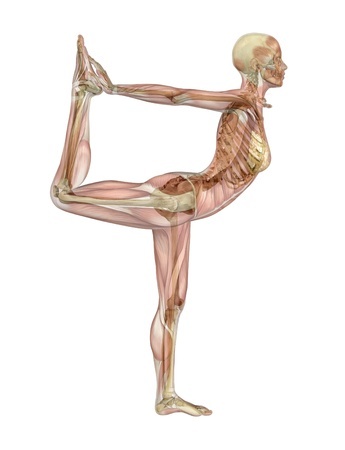 ‘Fascia’, if you haven’t heard of it, take note as it is the big thing in ‘Soft Tissue’ these days. What is this stuff dubbed ‘The Cinderella’ tissue by Dr Schleip and how does it impact how we treat clients as massage therapists? In its simplest terms it is a web of collaginous fibres that hold everything in the body together so we act as one strong and co-ordinated unit, a single organ. Fascia connects skin, veins, organs, nerves, muscles and bones together so we can move and function by distributing the stresses and strains across our body. On that basis, if it is restricted or damaged its impact on the body can be vast.If that is the case then why has Fascia been ignored for so long?
One view is that since it differs from person to person in texture & quality it has been difficult to describe. In addition it cannot be split easily into segments that we can name like muscles and bones (Dr. Schleip) which again has made it harder to document and study. The good news is that technology has now improved to a level where Fascia can now be studied in more detail so research is catching up on proving why this tissue is so important and how it impacts the body.
Anatomy Trains
The most useful description I have found on how Fascia impacts movement patterns and muscular connections in the body is described in ‘Anatomy Trains’ by Thomas Myers. Here Myers shows how the body can be split into a number of functional lines or trains. Take for example the ‘Superficial Back Line’ consisting of the following:
|
Bony Stations
|
Myofascial Tracks
|
|
1
|
Plantar surface of toe phalanges
|
|
2
|
Plantar fascia and short tow flexors
|
|
3
|
Calcaneous
|
|
4
|
Gastrocnemius/Achilles tendon
|
|
5
|
Condyles of femur
|
|
6
|
Hamstrings
|
|
7
|
Ischial tuberosity
|
|
8
|
Sacrotuberous ligament
|
|
9
|
Sacrum
|
|
10
|
Sacrolumbar fascia/erector spinae
|
|
11
|
Occipital ridge
|
|
12
|
Galea aponeurotica/epicranial fasica
|
|
13
|
Frontal bone, supraorbital ridge
|
In addition to the myofascial links we also have the circulation and neural impacts. Fascia holds 10 times more sensory nerve endings than muscle, is also home to blood vessels and much more. Research shows that Fascia actually responds to strong mechanical force. Now I don’t advise that that is what we apply in our treatments, rather the debate on the ‘release’ we feel and create as therapists when working in the Fascia is hinged mainly on this neurological quality. Shacklock describes the impact of very well:
‘Fact: Every Muscle Has to Be Supplied by Nerves and Blood Vessels. These “wires and tubes” arrive encased in a fascial sheath. If this sheath is twisted or impinged, or if it becomes too short through bad posture, muscle function is affected (Shacklock 2005).’
There are many reasons why this is an important statement but the two I cling to in my soft tissue work is that good circulation is needed for good healing and secondly Fascia is critical in proprioceptive work given its high level of innervation. By using fascial release techniques we are stimulating these neural receptors, which in turn stimulate the muscles and in response create a change. This is also why functional exercise is key as part of rehabilitation following an injury. It is not enough to simply engage the muscle in question, we need that muscle to be working as part of the connected functional plane to take advantage of this increased proprioceptive quality and ensure that our clients return to optimal function following injury.
Treatment
This research on Fascia challenges our thinking as therapists. It is no longer acceptable to look at injury, pain or dysfunction in isolation when creating a treatment plan or even when advising on homecare for our clients. There are many reasons why Fascial restrictions arise – scar tissue, surgery, injury, repetitive movements and posture so it is likely that everyone will present with a level of dysfunction.
Take the example of a post natal client, who has struggled to stand upright in ‘good posture’ since the birth of their child? How can they stand up right if the fascia at the scar is pinning them down? Have they altered their resting posture to a position where they can be in an upright state but causing damage and dysfunction to their body in the process? The ‘bad back’ could merely be a symptom of a scarred and immobile fascia at the site of the c-section.
Whether your tool of choice is Rolfing, Structural Integration, Fascial Tools or Myofascial Release ensure you have a way to treat and affect the Fascia along with the other soft tissues. Look beyond the obvious, find and release restriction or dysfunction looking across the whole body and make a real difference to your clients. Finally, in the words of Dr. Schleip remember that ‘No muscle is a functional unit’. Go forth and explore!
Reference’s & Related Information
“Strolling Under The Skin” Dr. Jean Claude Guimberteau’s video series
“What is Fascia? “,Robert Schleip, Heike Ja¨ger, Werner Klingler: http://www.fasciaresearch.de/Schleip2012_FasciaNomenclatures.pdf
“Fascia Research from a Clinician/Scientist’s Perspective”, Thomas W. Findlay: http://www.ijtmb.org/index.php/ijtmb/article/view/158/192
“Anatomy Trains”, Thomas Myers 2nd Edition 2009

